
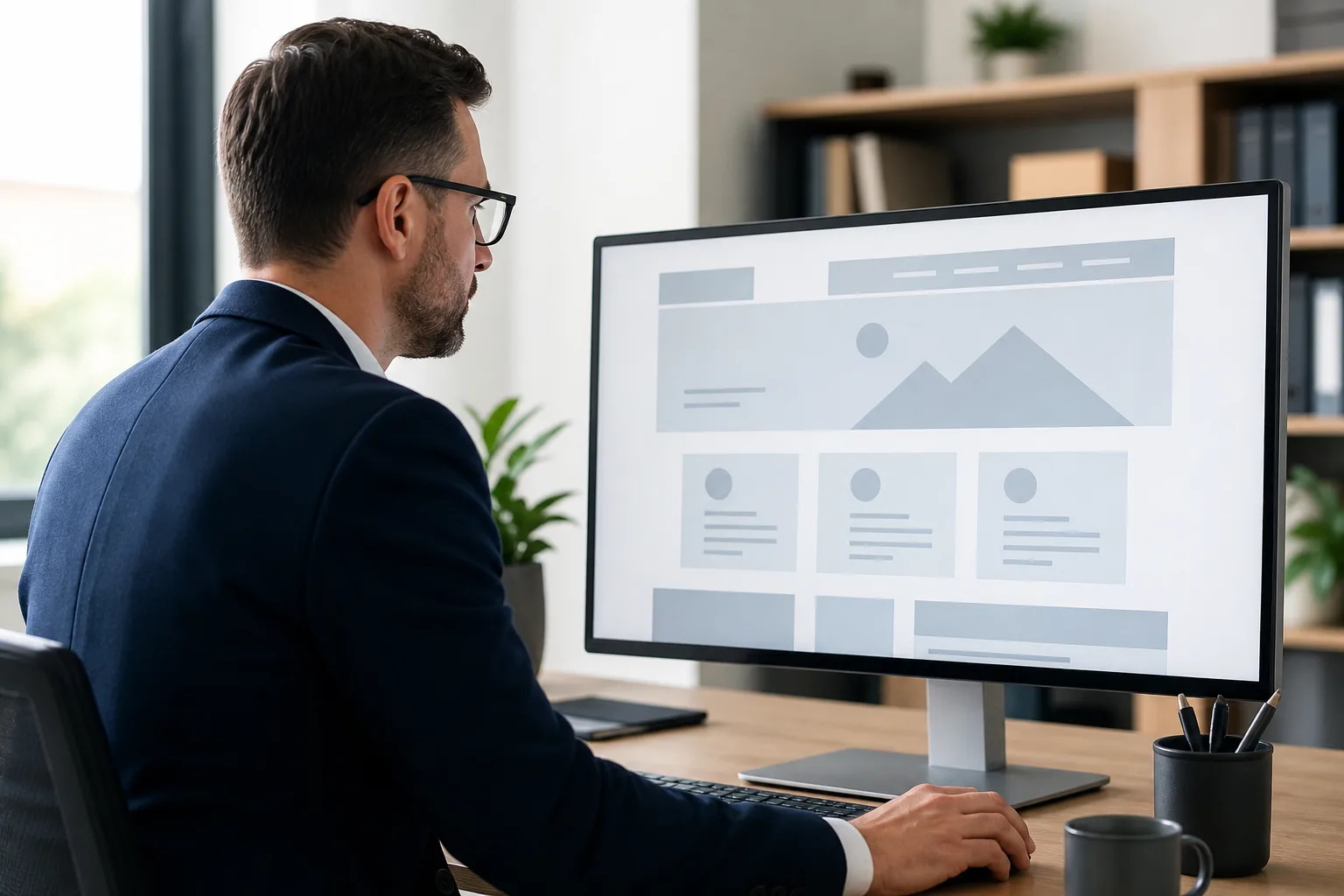
Business Web Design
A site that explains the work and asks for the next step.
Service and lead-gen websites need clear pages, crawlable structure, and calls to action — not a slide deck published as HTML. We design the brochure you actually need, then stop before we pretend it is a store.
What a business website is for
A business site has a short list of jobs: who you are, the services, where you operate, and an easy inquiry. Search engines need those facts in headings and pages they can fetch. This is not ecommerce web design — no catalog, inventory, or checkout. Location pages, service pages, and a contact path are the architecture. If those location pages also have to rank, pair this with regional SEO or multi-location SEO.
Where business sites fail quietly
One long homepage instead of a site
Services buried in a scroll have no URL to rank and no place to send a campaign. Information architecture is the first design decision.
Forms that hide the offer
A generic “contact us” with no context after a service page wastes the visit. Each important page should ask for a specific next step.
Templates that fight the CMS
If the marketing team cannot update a service or add a location without breaking layout, the site goes stale — and search follows.

What a business build includes
- IA for services, about, locations (if you have them), and contact
- Templates with headings, metadata, and crawlable internal links
- A contact path that matches the page the visitor came from
- Responsive layout and performance on the templates that carry traffic
- Implementation on the platform you choose
- Handoff so your team can edit the pages they own
How the build is sequenced
Discover
We list the pages you must have, who will edit them, and which ones need to rank. We also confirm this is not a store.
Strategy
You get a sitemap, a platform recommendation, and the SEO constraints (locations, service templates) before visual design locks.
Build / Optimize
We design and implement the templates, forms, and metadata in one pass — not a visual layer with SEO taped on later.
Measure
We confirm the important URLs resolve, forms submit, and you can see which pages produce inquiries.
What you should be able to do
A visitor can understand the offer in one pass, reach a service or location page that has its own URL, and send an inquiry. Your team can update the facts without a redesign. Search engines can fetch the same content a person sees.
Related work
Business site questions
How is this different from an ecommerce site?
A business site sells an inquiry: services, trust, locations, contact. A store sells SKUs: products, inventory, categories, and checkout. Mixing them without a real catalog usually produces a weak version of both.
Can you add location pages later?
Yes, if the templates were built for it. If you already have many sites, say so in discover — that changes the IA and may be a multi-location SEO engagement as well.
Which platform do you recommend for a service company?
The one your editors will actually use. WordPress and Webflow are common. Next.js fits when the site is closer to an application. HTML fits when the page count is small and stable. We will say so on the strategy call.
Bring the pages you already know you need
Share the current site, who edits it, and whether you have locations. We will tell you if this is a business build — or a store.
Get Started Today!